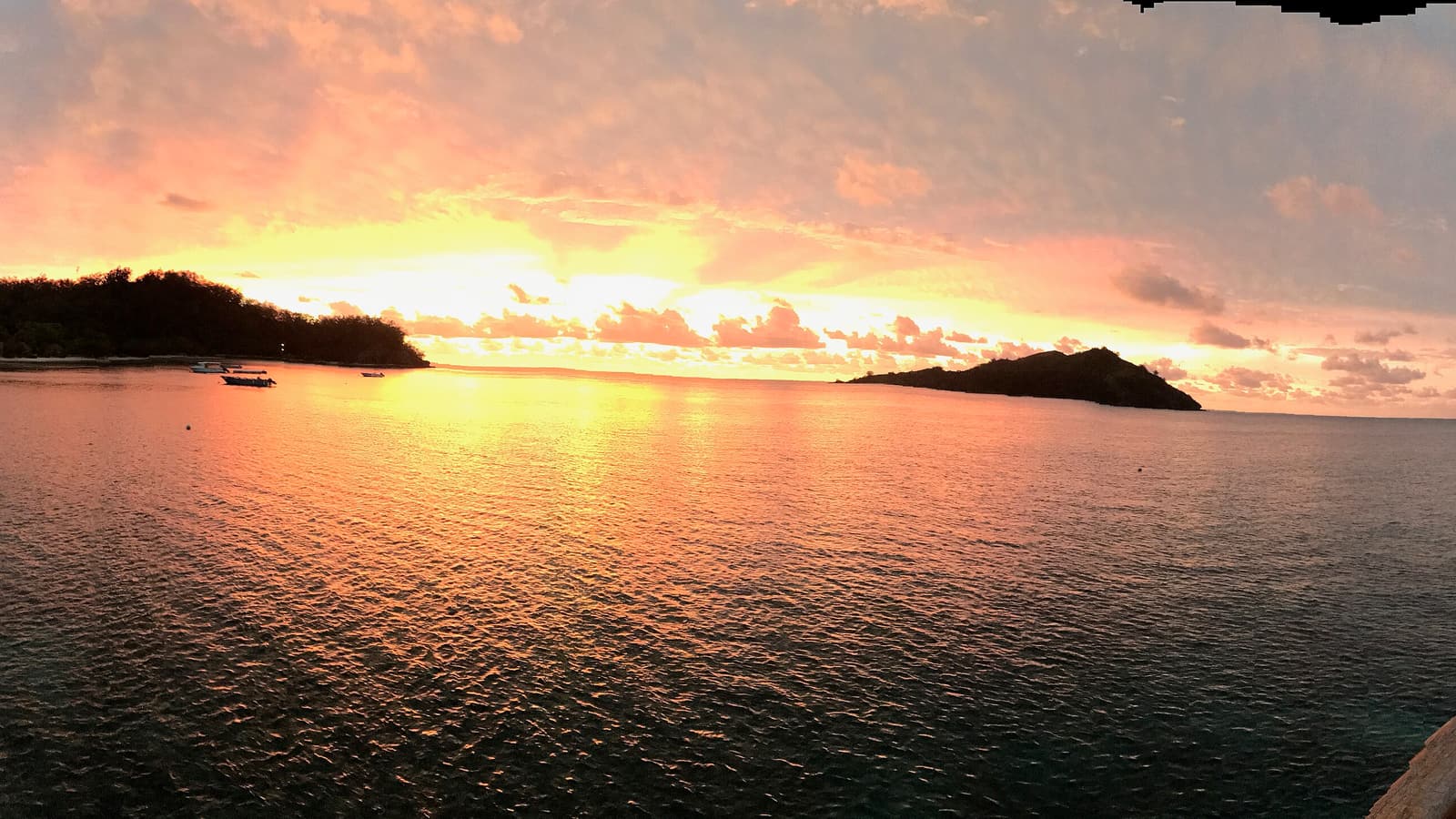
The Mamanucas sit in the rain shadow of Viti Levu’s mountains, which makes them one of the driest, sunniest corners of Fiji in every month. There is no bad time to come — but there is a dry season from May to October and a wet season from November to April, and they feel different.
The year at a glance
| Months | Weather | Sea | Crowds & prices |
|---|---|---|---|
| May – June | Dry, sunny, 26–29 °C by day, cooler nights | Clear; about 26–27 °C | Moderate — an excellent time |
| July – September | Driest and coolest; steady trade winds | Clearest water; about 25–26 °C; biggest surf | Peak season, highest prices |
| October | Warming up, still mostly dry | Warming; good visibility | Easing after school holidays |
| November – December | Hot and more humid; afternoon showers | About 27–28 °C | Quiet until the Christmas peak |
| January – March | Hottest and wettest; cyclone risk highest | About 28–29 °C; reduced visibility after rain | Lowest prices outside holidays |
| April | Rain easing; still warm | Warm; improving visibility | Busy at Easter, otherwise quiet |
Dry season: May to October
This is the classic time to visit. Days are warm rather than hot, humidity is low, rain is rare and the south-east trade wind keeps things fresh — occasionally too fresh for a smooth boat ride. Underwater visibility is at its best. The trade-off is demand: July, August and September coincide with winter and school holidays in Australia and New Zealand, and family resorts fill many months ahead.
Wet season: November to April
The wet season is hotter, stickier and greener. Rain in the Mamanucas tends to come as heavy bursts, often late in the day, with sunshine in between — whole grey weeks are unusual here compared with eastern Fiji. The sea is bath-warm and often glassy. Prices drop noticeably outside Christmas, New Year and Easter, and the islands are peaceful.
Best time for…
- Beach weather and snorkelling: May to October.
- Diving visibility: June to October; warmest water December to April.
- Surfing: the biggest, most consistent swells from about May to September; smaller, cleaner waves and lighter winds in the summer months.
- Manta rays (in the Yasawas): roughly May to October.
- Lower prices: February, March, early May and November.
- Avoiding crowds: outside Australian and New Zealand school holidays, whatever the season.
- Sailing events: Fiji Regatta Week at Musket Cove is traditionally held in September.
Wind, tides and day trips
Two things affect a day in the islands more than the calendar. The trade wind usually builds through the day, so morning crossings are smoother and floating-bar trips are most pleasant on calm days. And the tide governs lagoon swimming, sandbank picnics and several surf breaks: at low tide some lagoons drain to ankle depth. Resorts post tide tables daily.
Fijian holidays and Sundays
Fiji Day on 10 October, Diwali in October or November, Christmas and Easter are public holidays; services on the mainland may be reduced, though resorts and most cruises operate normally. Sundays are quiet in the villages all year.
Ready to plan? Compare day cruises, choose your island and check how to get there.